We Are Still Subsidising Property. We Have Just Changed Who Gets the Support.
Australia is restricting negative gearing while expanding taxpayer support for social and affordable housing. Mark Kilroy argues that these programs should be judged through transparent project-level reporting showing support per dwelling, ownership, investment returns, rents, long-term public benefit and the number of additional homes delivered for every taxpayer dollar.

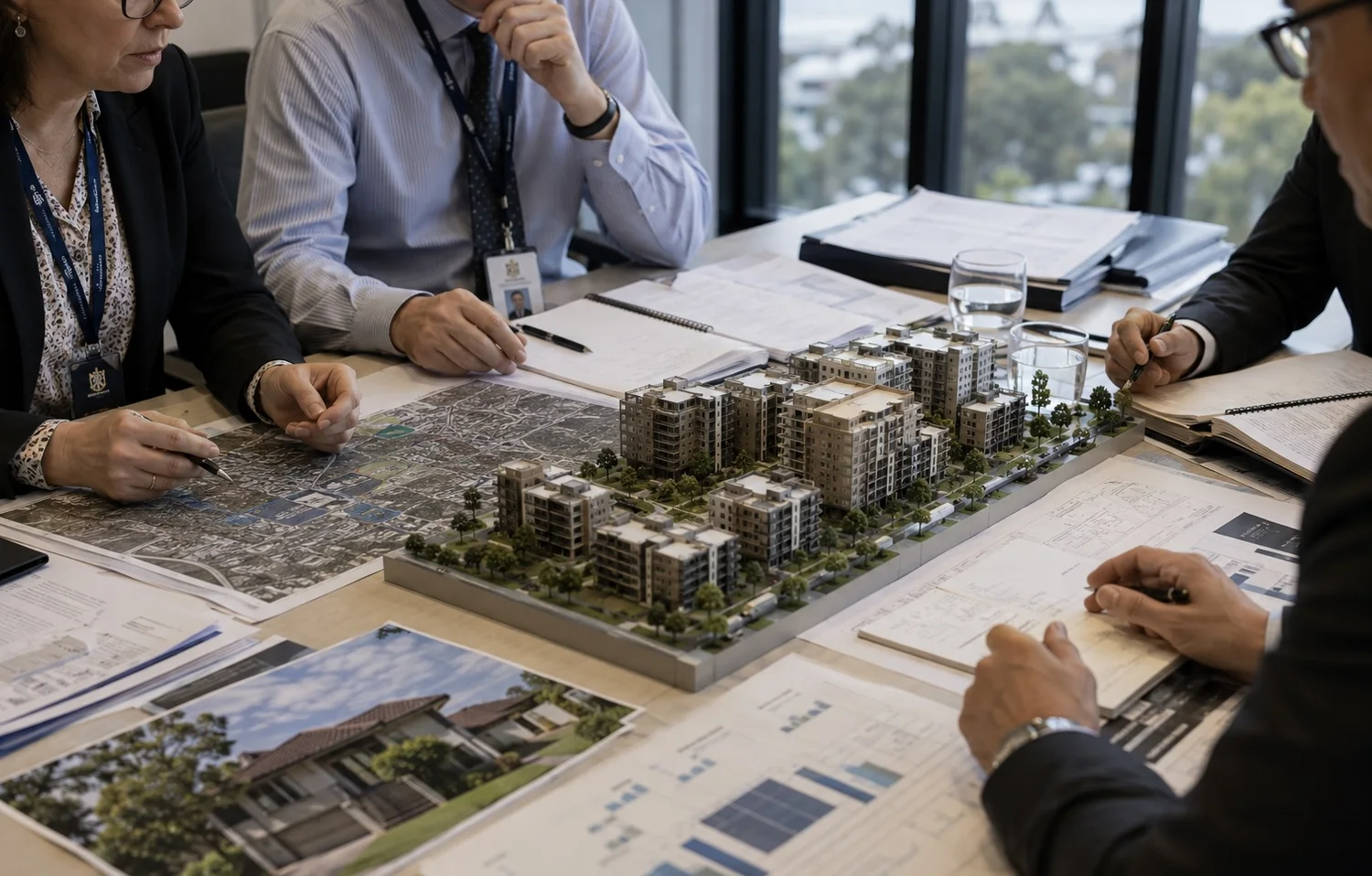
Australia is still subsidising property. We have just changed how the support works and who receives it.
I have been looking more closely at Australia's housing policy.
There is one number I cannot get past.
$770,000.
According to the Australian National Audit Office, Treasury estimated average Australian Government support for homes funded through the first two rounds of the Housing Australia Future Fund Facility and National Housing Accord Facility at around $770,000 per dwelling over 25 years.
In today's money, the estimated present value was around $393,000 per dwelling.
Did you know that?
I did not fully understand the scale of it until I started digging through the government documents.
The Support Has Not Disappeared
For years, Australia has debated negative gearing.
Investors have been told they receive too much tax support. From 1 July 2027, the legislated reforms will generally limit negative gearing for residential property investments to new builds, with transitional protection for properties held when the policy was announced.
The stated aim is to direct more investment towards new housing and improve the opportunity for first-home buyers.
But government support for property has not disappeared.
We are changing how it is provided and who receives it.
How the New Model Works
The government wants more social and affordable housing.
To deliver it, the model brings together government funding, community housing providers, developers, banks, superannuation funds and other institutional investors.
These institutions are not charities.
Nor should they be.
A super fund invests its members' retirement savings and needs to earn an appropriate risk-adjusted return.
But affordable housing generally earns less rent than comparable market housing.
Government support helps bridge that gap. Depending on the project, this can include concessional finance, capital grants and government-backed availability payments over a 25-year operating term.
The investor can receive income.
The tenant gets more affordable housing.
The project gets built.
Depending on the structure, a private or institutional participant may also hold an ownership interest and potentially participate in the asset's long-term value.
Maybe that is a good model.
But taxpayers should understand exactly what they are paying for and what they retain.
Different Subsidies Deserve the Same Scrutiny
Negative gearing is also described by government as tax support.
Instead of the government writing an investor a cheque, an eligible investor uses a rental loss to reduce taxable income.
The new social and affordable housing arrangements are not the same. They support an important social outcome and below-market rents for eligible tenants.
But both approaches involve taxpayers supporting property investment.
If we rigorously debate the cost and beneficiaries of one form of support, we should apply equally rigorous scrutiny to the other.
Are We Fixing Affordability or Paying Around It?
This is where I struggle with the current approach.
Why does a dwelling need hundreds of thousands of dollars of government support to become financially viable?
As a Quantity Surveyor, I look at the cost before I look at the subsidy.
- Land
- Construction
- Planning
- Enabling infrastructure
- Consultants
- Building regulation
- Taxes and charges
- Finance
- Approval delays
- Compliance
Every one of those costs eventually has to be paid by somebody.
The Productivity Commission's July 2026 interim report found that Australia does not build enough housing where people want to live. It identified land-use controls and better coordination of enabling infrastructure as reforms likely to have the greatest effect on supply and affordability.
So we have an unusual situation.
Government is identifying parts of the system that make housing slower and more expensive to deliver.
Taxpayers are then helping fund the gap required to make that expensive housing affordable.
Are we fixing the problem, or subsidising around a problem we helped create?
What Are Taxpayers Actually Getting?
This is where Australia needs much more transparency.
Forget another announcement telling us the government is investing $5 billion or delivering $10 billion.
Spending money is not an outcome.
It is also not the government's money. It is public money the government is entrusted to manage.
The 2026–27 Budget forecasts Commonwealth gross debt at $1.051 trillion by 30 June 2027.
For every major taxpayer-supported housing project, I would like to see a simple investment statement answering:
- What did the project cost?
- How much did taxpayers contribute?
- How much did private investors contribute?
- What was the government support per dwelling?
- What rent will be charged?
- How long will taxpayers provide support?
- Who receives the investment return?
- Who owns the property during and after the support period?
- Who benefits from future capital growth?
- What happens after 25 years?
Those are not political questions.
They are the questions I would ask about any investment.
What About First-Home Buyers?
There is another part of this debate that deserves careful thought.
One justification for changing property tax settings is to give first-home buyers a better opportunity.
But making an established property cheaper does not automatically mean a first-home buyer can purchase it.
They still need a deposit.
They still need sufficient income.
They still need to pass the bank's serviceability assessment.
And they still need to make the repayments.
If investors leave parts of the established market and prices soften, that may help some buyers.
But what happens if the households we want to replace them still cannot obtain finance?
And what happens to rental supply while that transition occurs?
These questions should be answered before falling prices alone are treated as proof of housing success.
Maybe We Are Measuring the Wrong Thing
Australia clearly needs social housing.
There are Australians the private market will not adequately house.
We may also need institutional capital if it can help build more homes at scale.
I am not arguing against either.
I am questioning how we measure success.
Government should not be congratulated simply because it spent $10 billion.
A private business would not survive for long if it measured performance that way.
The real questions are:
- How many additional homes were delivered?
- At what taxpayer cost?
- How quickly were they delivered?
- What public benefit remains after 25 years?
- How does that outcome compare with the alternatives?
Perhaps spending $393,000 in today's money to support one affordable dwelling for 25 years represents excellent value.
But perhaps investing that money in infrastructure, serviced land, faster approvals or removing unnecessary development costs could unlock several homes.
We should know.
The Number That Matters
There is a bigger principle here.
Government does not give us money. It manages our money.
When it does not have enough, it borrows money that taxpayers, including the next generation, ultimately have to repay.
So before we celebrate the next billion-dollar housing announcement, I would like to see one number:
How many additional homes did we actually get for every taxpayer dollar spent?
If Australia is going to subsidise housing either way, surely that is the number that matters.
“Property is bought once. It has to be held every day.”
Sources
- Australian National Audit Office, National Housing Accord and Housing Australia Future Fund performance audit
- Australian Taxation Office, Reforming negative gearing and capital gains tax
- Productivity Commission, Housing supply regulation interim report, July 2026
- Australian Government, 2026–27 Budget Paper No. 1, Statement 3
Frequently Asked Questions
How much government support is estimated per HAFFF and NHAF dwelling?
The ANAO reported Treasury's estimate of average Australian Government support at around $770,000 per dwelling over 25 years for homes funded through the first two rounds. The estimated present value was around $393,000 per dwelling.
How is this housing support provided?
Depending on the project, support can include concessional loans, capital grants and government-backed availability payments over a 25-year operating term.
What changes to negative gearing begin in July 2027?
The legislated reforms generally limit negative gearing for residential property investments to new builds from 1 July 2027, with transitional protection for properties held when the policy was announced.
Is social housing support the same as negative gearing?
No. They use different mechanisms and pursue different outcomes. The comparison is that both involve public support for property, so the cost, beneficiaries and results of each should be measured transparently.
What should taxpayers be told about supported housing projects?
Reporting should include total project cost, taxpayer and private contributions, support per dwelling, rent levels, the duration of support, ownership, investment returns, capital-growth beneficiaries and what happens after the support period.
Explore further
Related commentary
Frameworks & tools
Republishing
You're welcome to republish this article in full or in part, provided it includes clear attribution to Mark Kilroy and a link back to the original at markkilroy.com.au.
For media enquiries, syndication requests, or to discuss republishing in print or digital publications, please get in touch.
The Kilroy Brief
One practical briefing on the policy, tax, cost and cash-flow forces shaping Australian property ownership. For owners, investors and advisers who want the mechanics behind the headlines. Sent when there is something worth saying, not to fill a schedule.