We Can't Solve the Gold Coast's Housing Challenge by Doing More of the Same
Recap of the Gold Coast Central Chamber of Commerce Property Forum at The Star Gold Coast, organised by Mark Kilroy: 300+ developers, business leaders and property professionals examined how the Gold Coast accommodates growth toward one million people ahead of the Brisbane 2032 Olympic Games. Mayor Tom Tate and Assistant Minister Rebecca Young provided government context before a panel of Adrian Puljich, Michael Matusik, Drew Bowie, Michael McNab and Andrew Gray, MC'd by developer Jack Corbett, debated construction costs, weak productivity, increasingly selective capital, modular construction financing hurdles, vertical communities, and whether a new home can be delivered below $750,000. The core takeaway: house prices can fall and Australia can still have a housing affordability and supply problem.

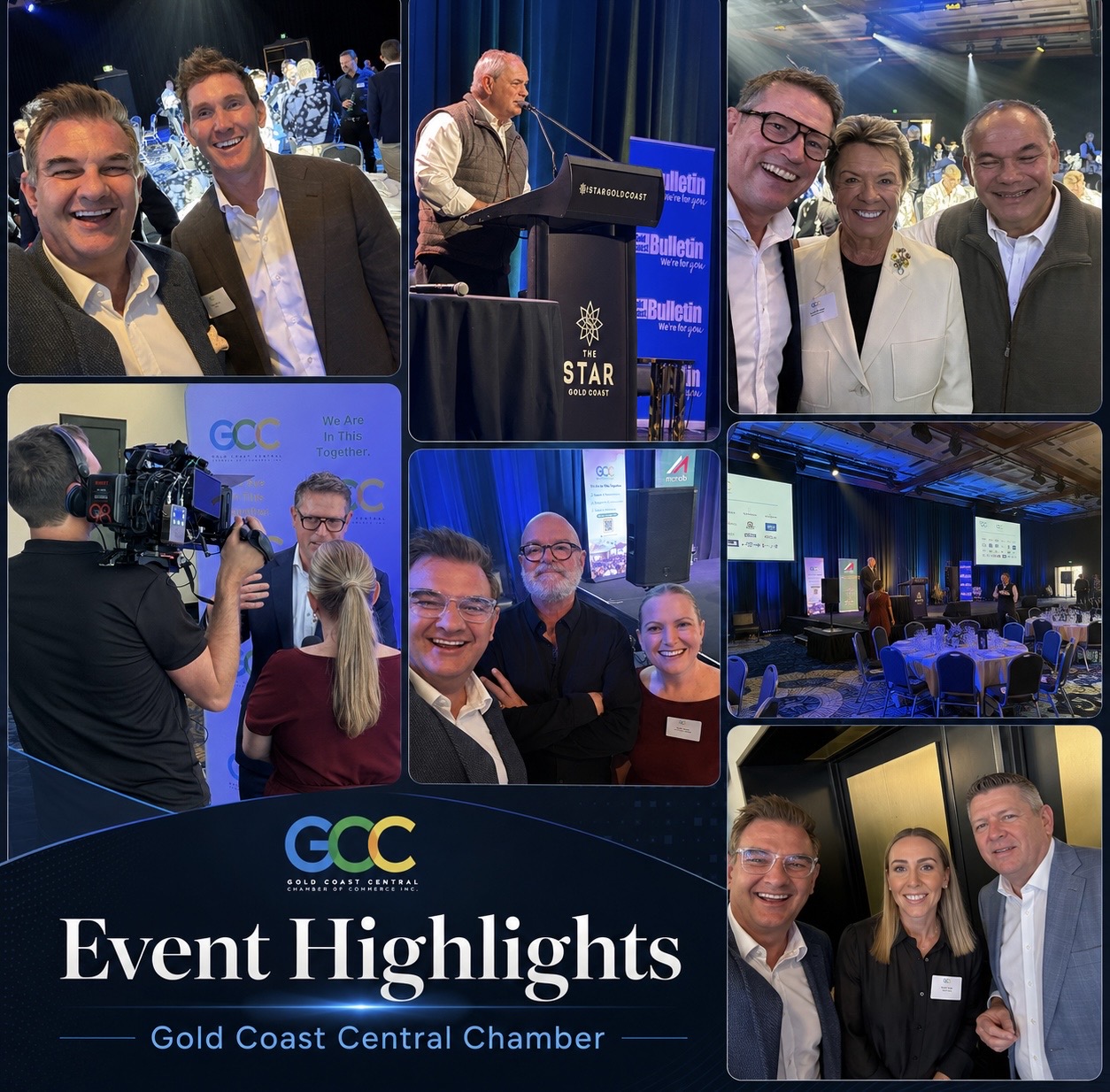
We can't solve the Gold Coast's housing challenge by doing more of the same.
That was at the heart of the Gold Coast Central Chamber of Commerce Property Forum last Friday.
I had the privilege of organising the event on behalf of the Chamber, with the support of our Board, bringing together a panel that could genuinely challenge how we think about the next phase of growth on the Gold Coast.
And with 300+ developers, business leaders and property professionals in a packed room, there was clearly an appetite for the conversation.
The event was framed around a major question:
How does the Gold Coast accommodate its growth toward a population of one million, particularly as we head toward the Brisbane 2032 Olympic and Paralympic Games?
Mayor Tom Tate opened the afternoon and Assistant Minister Rebecca Young also provided an overview, giving the room important government context before we moved into the industry discussion.
Our MC, Jack Corbett, brought an important practitioner's perspective of his own. As a developer involved in delivering around 200 homes annually, Jack knew where to challenge the panel, push the discussion further and get the most out of the afternoon.
Our panel brought together Adrian Puljich, Michael Matusik, Drew Bowie, Michael McNab and Andrew Gray, each bringing a different perspective to one of the biggest challenges facing the Gold Coast and Australia more broadly: how we actually deliver enough housing.
The Issues Are Interconnected
Because the issues are interconnected.
- Construction costs remain high.
- Productivity remains at very low levels.
- Labour and materials remain expensive.
- Finance is becoming more selective.
- And buyer and investor sentiment is being tested.
If a Project Cannot Attract Funding, It Does Not Get Built
Drew Bowie made one of the most important points of the afternoon.
A project can have a great site, strong demand and sound fundamentals — but if it cannot attract funding, it does not get built.
Capital is becoming increasingly competitive.
A Gold Coast project may be competing for funding not only with another development down the road, but with projects in Brisbane, Sydney, Melbourne, Perth or elsewhere.
Drew also cautioned that the market is likely to be challenging over the next few years.
And when you look at the ingredients already in place, it is easy to understand why.
- Higher construction costs.
- Weak productivity.
- More expensive capital.
- Greater scrutiny from lenders.
- Changing investor settings.
- Pressure on affordability.
- And uncertainty around where property prices and demand settle.
Individually, each is manageable.
Together, they create a much more difficult development environment.
That Makes Innovation Even More Important
We explored modular construction, backyard and smaller homes, shared-housing models, alternative forms of density, vertical communities and better use of the land and infrastructure we already have.
But even some of the solutions bring new challenges.
Modular construction manufactured offshore, including in China, may offer cost and delivery advantages, yet funding can be difficult because only a limited number of lenders are currently comfortable financing materials and components before they arrive on the Australian building site.
What Does It Really Cost to Deliver a New Home?
We also had a great debate around what it really costs to deliver a new home today.
The proposition was that it is extremely difficult to deliver one for much below $750,000.
Michael Matusik challenged that, arguing it can be done closer to $650,000.
That is exactly the sort of constructive disagreement we wanted.
Adrian Puljich also shared a very different approach to housing and community development, including GemLife's move toward vertical communities, with the first being developed at Currumbin.
The Takeaway
The takeaway for me was simple.
House prices can fall and we can still have a housing affordability and supply problem.
If construction costs remain high, productivity remains low and otherwise viable projects cannot secure capital, new supply will remain difficult to deliver.
As a Board member of the Gold Coast Central Chamber of Commerce, I was proud to bring this event together and see such a strong cross-section of government, property and business leaders engaging seriously with these questions.
The Gold Coast's growth is coming.
The next few years may be challenging, but that makes it even more important that we finance, design and deliver housing differently.
“Property is bought once. It has to be held every day.”
Sources
Frequently Asked Questions
What was the Gold Coast Central Chamber of Commerce Property Forum?
An industry event at The Star Gold Coast, organised by Mark Kilroy on behalf of the Chamber Board, bringing together 300+ developers, business leaders and property professionals to examine how the Gold Coast accommodates growth toward a population of one million ahead of the Brisbane 2032 Olympic and Paralympic Games.
Who spoke at the forum?
Mayor Tom Tate opened the afternoon and Assistant Minister Rebecca Young provided a government overview. Developer Jack Corbett MC'd, and the panel featured Adrian Puljich, Michael Matusik, Drew Bowie, Michael McNab and Andrew Gray.
What is stopping housing projects on the Gold Coast from being built?
The forum identified interconnected pressures: high construction costs, very low productivity, expensive labour and materials, increasingly selective finance and tested buyer sentiment. As Drew Bowie put it, a project with a great site and strong demand still doesn't get built if it cannot attract funding.
What does it cost to deliver a new home on the Gold Coast today?
The forum debated the proposition that it is extremely difficult to deliver a new home for much below $750,000. Michael Matusik challenged that view, arguing it can be done closer to $650,000 — exactly the kind of constructive disagreement the event was designed to produce.
What alternative housing models were discussed?
Modular construction, backyard and smaller homes, shared-housing models, alternative forms of density, vertical communities (including GemLife's first vertical community at Currumbin) and better use of existing land and infrastructure. Even these bring challenges — few lenders will finance offshore-manufactured modular components before they arrive on site.
Can falling house prices fix housing affordability?
Not on their own. The forum's core takeaway was that house prices can fall and Australia can still have an affordability and supply problem — if construction costs stay high, productivity stays low and viable projects cannot secure capital, new supply remains difficult to deliver.
Explore further
Related commentary
Frameworks & tools
Republishing
You're welcome to republish this article in full or in part, provided it includes clear attribution to Mark Kilroy and a link back to the original at markkilroy.com.au.
For media enquiries, syndication requests, or to discuss republishing in print or digital publications, please get in touch.
The Kilroy Brief
One practical briefing on the policy, tax, cost and cash-flow forces shaping Australian property ownership. For owners, investors and advisers who want the mechanics behind the headlines. Sent when there is something worth saying, not to fill a schedule.