Queensland Has Promised an Olympics. But Who Is Going to Build It?
Chartered quantity surveyor Mark Kilroy examines the question Brisbane 2032 planning keeps avoiding: who is actually going to build it? Queensland has promised 17 new and upgraded Olympic venues within a $7.1 billion envelope — but the independent Games infrastructure review estimated escalation had already added roughly $1.1 billion by March 2025, before major venue construction began. With the Queensland Audit Office projecting an average shortage of about 18,200 construction workers (peaking near 50,000), a $119 billion state capital program, a Queensland-wide Games footprint stretching 1,700 km from Brisbane to Cairns, and the Oxford Olympics Study's 156% average cost overrun as a warning, the piece argues the overlooked cost of the Games may be the homes that never get built — and calls for one consolidated, transparent picture of the full Olympic delivery program.

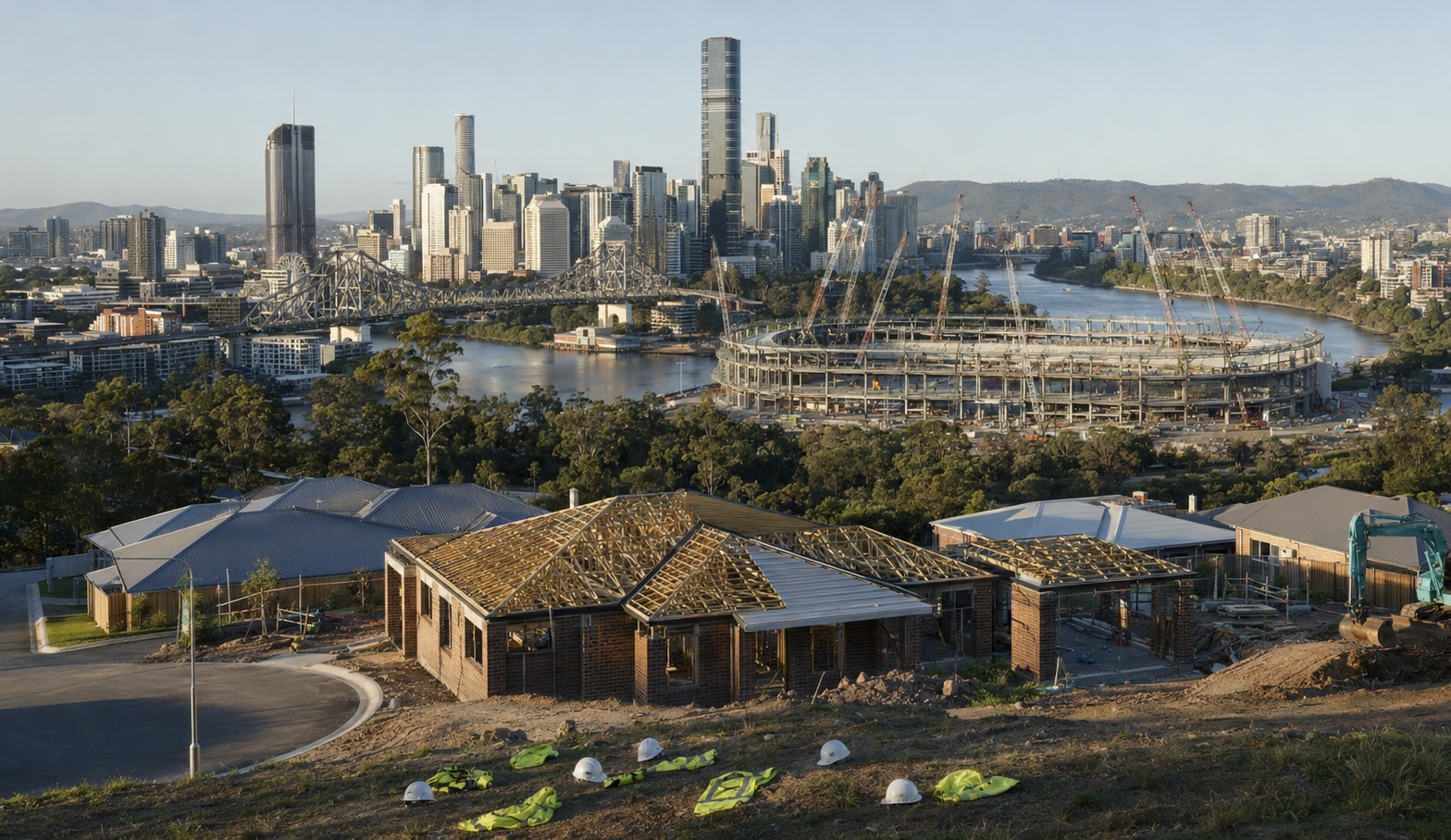
I want Brisbane 2032 to succeed. It will put Queensland on the world stage, and it could leave important infrastructure for future generations. But as a chartered quantity surveyor, I believe we are avoiding the most important question.
Who is actually going to build it?
Queenslanders are being told that 17 new and upgraded Olympic venues will be delivered within a $7.1 billion funding envelope — including a new 63,000-seat stadium at Victoria Park, a National Aquatic Centre, indoor sports centres and venue upgrades across the state.
But the stadiums are only one part of the task. We must also deliver athlete villages, transport connections, training facilities, temporary venues, regional accommodation, security infrastructure and the enormous operational overlay required to stage an Olympic and Paralympic Games — all before a deadline that cannot move.
The $7.1 Billion Has Already Lost Purchasing Power
The $7.1 billion venue budget was based on construction costings prepared in February 2023. By March 2025, the independent Games infrastructure review estimated that construction escalation and delays had added approximately $1.1 billion to the cost of delivering the same outcomes.
In other words, work previously estimated at $7.1 billion would already have cost approximately $8.2 billion — before most major venue construction had even begun.
The government can continue describing the program as a $7.1 billion investment. But keeping the same headline budget does not mean the underlying cost has stopped increasing. It usually means something else must change:
- The scope is reduced.
- Projects are redesigned.
- Additional funding is found.
- More responsibility is transferred to private investors.
- Or the cost appears somewhere else.
Early Estimates Are Not Construction Contracts
Political announcements often present a budget as though the price has been locked in. It has not. A preliminary estimate is not the same as a tendered construction price.
Major projects must still pass through design development, approvals, documentation, procurement and contractor pricing. Ground conditions, service relocations, environmental requirements, security specifications and transport connections can all materially affect the final cost.
The proposed Victoria Park stadium has been estimated at approximately $3.8 billion — but that figure has not included all associated precinct and transport infrastructure.
As quantity surveyors, we cannot properly assess a budget until we understand the complete scope. What is included? What has been excluded? What assumptions have been made? What contingency has been allowed? Who carries the escalation risk?
These are not minor technical details. They determine what taxpayers ultimately pay.
Queensland Is Already Short of Construction Workers
This is the part of the Olympic discussion that concerns me most. Queensland is not preparing for the Games with an idle construction industry waiting for work — we are already trying to build housing, hospitals, schools, roads, rail and energy infrastructure.
The Queensland Audit Office reports that the state could face an average shortage of approximately 18,200 construction workers over eight years, with the shortfall potentially reaching 50,000 workers at its peak. At the same time, the Queensland Government has a four-year capital program of approximately $119 billion.
Olympic venues will compete with every other project for the same:
- Engineers
- Project managers
- Quantity surveyors
- Concreters
- Steel workers
- Plant operators
- Electricians
- Specialist subcontractors
The opening ceremony cannot be postponed because a contractor is unavailable or a tender comes in over budget. That immovable deadline changes the commercial position.
As 2032 approaches, work may need to be accelerated and more overtime may be required. Contractors will understand that the government has limited room to negotiate or delay. That is when taxpayers become most exposed.
What Happens to Housing?
I deal with developers regularly, and private developments do not continue at any cost. When construction costs rise beyond what buyers, tenants or investors can support, projects stop. Apartment developments are delayed. Housing sites remain vacant. Commercial projects are reduced or abandoned.
Government can borrow more money to complete an Olympic venue. A private developer cannot simply pass unlimited construction increases onto the market.
This is the overlooked cost of Brisbane 2032.
The final bill may not only be measured in the cost of stadiums. It may also be measured in the homes and private developments that did not proceed because workers and construction capacity were committed elsewhere. At a time when Queensland desperately needs more housing, that risk deserves far more attention.
A Queensland-Wide Games Increases the Complexity
The decision to spread events across Queensland sounds positive, and regional communities should share in the investment and opportunity. But Queensland is geographically larger than many countries.
Events are proposed across Brisbane, the Gold Coast, Sunshine Coast, Toowoomba, Maryborough, Rockhampton, Mackay, the Whitsundays, Townsville and Cairns, and interstate football venues may also be used. Brisbane to Cairns is approximately 1,700 kilometres by road.
Athletes, officials and spectators will not travel that distance each day, so regional locations will need to operate as separate Games hubs — with additional accommodation, transport fleets, training facilities, medical services, security, volunteers, broadcast infrastructure and temporary works.
Using an existing regional venue may save money on constructing a new stadium. But those savings must be tested against the cost of operating across thousands of kilometres.
Are we delivering one Olympic Games, or several smaller Games simultaneously?
Other Hosts Offer a Warning
Olympic cost overruns are not unusual. The Oxford Olympics Study found an average real overrun of 156% across the Games it examined. Sydney 2000 recorded a 90% overrun under the study's sports-related methodology, while London 2012 recorded 76%.
Tokyo faced a pandemic and postponement. Rio dealt with recession and political instability. London delivered through the global financial crisis. Brisbane's circumstances are different — we are not responding to an unexpected global event.
We already know that construction costs are high. We already know that productivity is weak. We already know that the workforce is insufficient. We already know that the state infrastructure pipeline is overloaded. We already know that the original $7.1 billion has lost purchasing power.
Yet we continue to expand the delivery program.
This Is Not an Argument Against the Olympics
It is an argument for transparency. Queenslanders deserve one consolidated picture showing:
- Venues and upgrades
- Athlete villages
- Temporary infrastructure
- Games-specific transport
- Regional logistics
- Security and operations
- Escalation and contingencies
- Private funding obligations
- Post-Games conversion costs
We also need a construction workforce plan that explains how Olympic projects will be delivered without further damaging housing supply.
I support Brisbane hosting a successful Games. But success cannot be measured only by whether the opening ceremony begins on time. It must also be measured by what the Games cost, what Queensland receives afterwards and what other projects we were unable to build along the way.
Politicians can announce a budget. The construction market will determine the final price.
“Property is bought once. It has to be held every day.”
Sources
Frequently Asked Questions
What is the budget for Brisbane 2032 Olympic venues?
Queenslanders have been told 17 new and upgraded venues will be delivered within a $7.1 billion funding envelope, including a 63,000-seat stadium at Victoria Park and a National Aquatic Centre. That budget was based on February 2023 costings; by March 2025 the independent Games infrastructure review estimated escalation had already added approximately $1.1 billion to delivering the same outcomes.
Is the $7.1 billion figure still realistic?
Keeping the same headline budget does not mean the underlying cost has stopped rising. When a budget is held while costs escalate, something else usually changes: scope is reduced, projects are redesigned, additional funding is found, responsibility shifts to private investors, or the cost appears somewhere else.
How much will the Victoria Park stadium cost?
It has been estimated at approximately $3.8 billion, but that figure has not included all associated precinct and transport infrastructure. A preliminary estimate is also not a tendered construction price — design development, approvals, procurement, ground conditions and security specifications can all materially affect the final cost.
Does Queensland have enough construction workers for the Olympics?
The Queensland Audit Office reports the state could face an average shortage of approximately 18,200 construction workers over eight years, potentially reaching 50,000 at its peak — while the government runs a four-year capital program of about $119 billion. Olympic venues will compete with housing, hospitals, schools, roads, rail and energy projects for the same engineers, quantity surveyors, concreters and specialist trades.
How could Brisbane 2032 affect housing supply?
Government can borrow more to complete an Olympic venue, but private developers cannot pass unlimited cost increases onto the market — when costs rise too far, apartment projects are delayed and housing sites sit vacant. The final bill of the Games may partly be measured in homes that were never built because workers and construction capacity were committed elsewhere.
Why does spreading the Games across Queensland add cost?
Events are proposed from Brisbane and the Gold Coast up to Townsville and Cairns — around 1,700 km apart by road. Regional locations will need to operate as separate Games hubs with their own accommodation, transport fleets, training facilities, medical services, security, volunteers and broadcast infrastructure, so venue savings must be weighed against the cost of operating across thousands of kilometres.
How often do Olympic Games run over budget?
Routinely. The Oxford Olympics Study found an average real cost overrun of 156% across the Games it examined, with Sydney 2000 at 90% and London 2012 at 76% under its sports-related methodology. Brisbane starts with known headwinds: high construction costs, weak productivity, an insufficient workforce and an overloaded infrastructure pipeline.
Is this article against Brisbane hosting the Olympics?
No. Mark Kilroy supports a successful Brisbane 2032. The argument is for transparency: one consolidated picture of venues, villages, temporary infrastructure, transport, regional logistics, security, escalation, private funding obligations and post-Games conversion costs — plus a workforce plan that protects housing delivery.
Explore further
Related commentary
Frameworks & tools
Republishing
You're welcome to republish this article in full or in part, provided it includes clear attribution to Mark Kilroy and a link back to the original at markkilroy.com.au.
For media enquiries, syndication requests, or to discuss republishing in print or digital publications, please get in touch.
The Kilroy Brief
One practical briefing on the policy, tax, cost and cash-flow forces shaping Australian property ownership. For owners, investors and advisers who want the mechanics behind the headlines. Sent when there is something worth saying, not to fill a schedule.